Using the Tools You Already Have to Prepare for ISO Certification
Preparing for ISO certification can often feel like a daunting and expensive process. Many companies assume they need to invest in new compliance software or overhaul their systems entirely. In reality, most organisations already have the tools they need — they’re simply not using them in a way that supports their management system.
By leveraging existing platforms like Asana, Jira, Notion, or even Google Workspace, you can build a robust, auditable, and efficient ISO framework without disrupting your teams or your budget.
Why Start with What You Already Use
ISO certification is as much about consistency and clarity as it is about documentation. The goal is to demonstrate that your organisation follows defined processes, reviews performance, and continuously improves. The tools you already use for project management, collaboration, or task tracking can easily support those goals.
Using existing tools has several clear advantages:
Reduced friction: Your teams already know how to use these systems, so compliance tasks become part of their daily routines rather than an added burden.
Better engagement: Familiar interfaces encourage ownership and participation.
Lower cost: You avoid unnecessary spending on niche compliance tools.
Real-time visibility: Leadership can easily monitor progress and compliance activities using dashboards and reports already built into these tools.
Mapping ISO Requirements to Common Tools
The key is to translate ISO requirements into practical, trackable workflows. Below are some examples of how everyday tools can be adapted for ISO use.
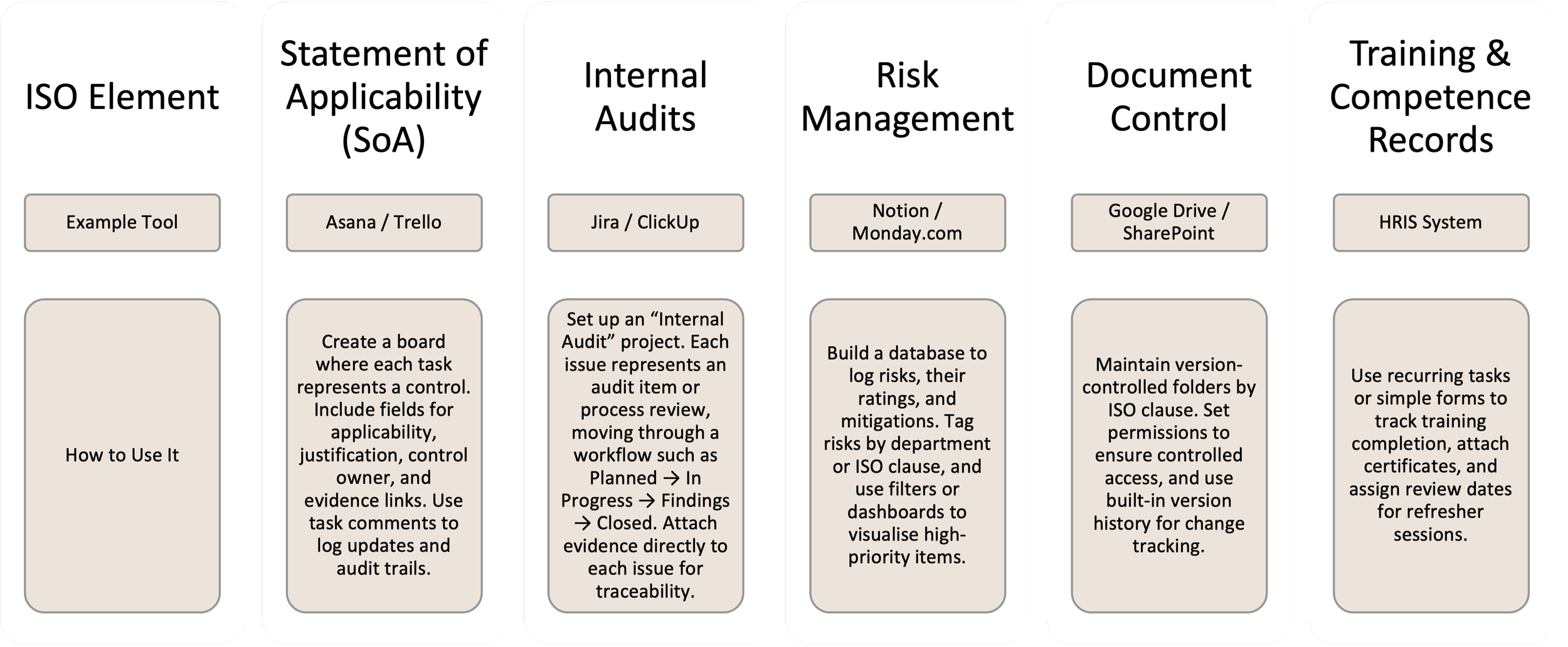
These examples show that ISO readiness doesn’t require a dedicated compliance system — it requires disciplined use of the tools already in place.
Making It Work in Practice
To make this approach effective, consistency and ownership are essential. A few simple actions can make a significant difference:
Nominate tool owners: Assign one or two “tool champions” per department to maintain structure and ensure updates are completed.
Establish templates: Use consistent naming conventions for tasks, folders, and audit items so everyone knows where to find information.
Automate reminders: Use existing notification settings to prompt reviews, follow-ups, and evidence submissions.
Centralise evidence: Keep all supporting documentation (screenshots, reports, meeting notes) linked directly within the same system to streamline audits.
When auditors arrive, clarity and consistency are what they value most. A simple, well-organised structure built within your existing tools demonstrates control and operational maturity far better than a flashy but underused compliance platform.
Avoiding Common Pitfalls
A few challenges to watch for:
Overcomplicating setup: ISO compliance doesn’t need a new project management philosophy — it just needs traceability and structure.
Mixing operational and compliance data: Keep ISO-specific boards or projects clearly separated from day-to-day work to avoid confusion.
Ignoring access control: Make sure permissions reflect responsibility and prevent accidental document changes.
Building a Sustainable Management System
ISO certification shouldn’t feel like a bolt-on to your business. The most successful certifications come when compliance processes are embedded into how people already work. By making the most of your existing toolset, you not only simplify the certification process but also build a living management system — one that supports quality, security, or environmental goals long after the initial audit.
